
India’s transportation infrastructure is moving into a smarter digital phase with the introduction of the Multi-Lane Free Flow (MLFF) tolling system. This new barrier-less toll collection model is designed to make highway travel faster, smoother, and more efficient.
For years, toll plazas have caused traffic jams, long waiting times, fuel wastage, and delays in cargo movement. MLFF aims to solve these issues by allowing vehicles to pass through toll points without stopping, helping maintain normal highway speeds.
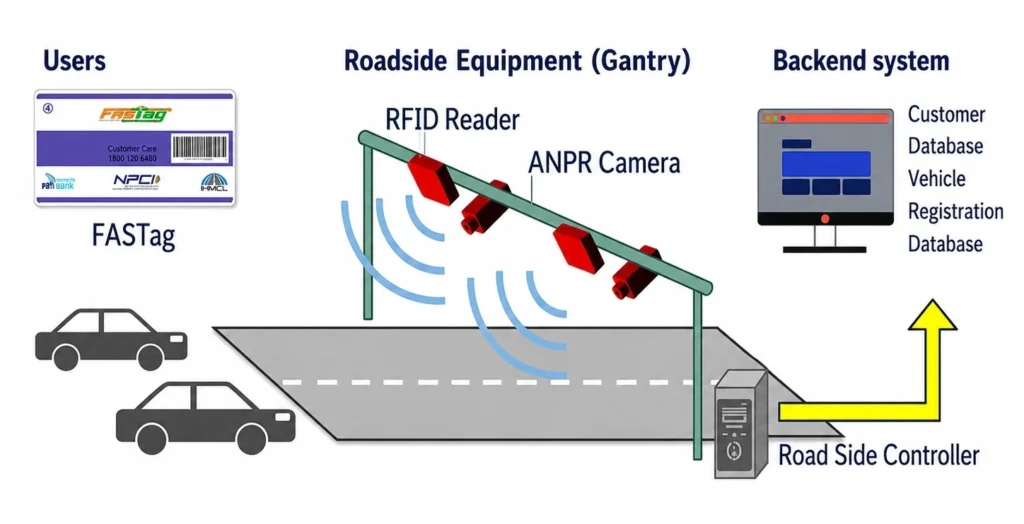
The system works using FASTag, RFID technology, and Automatic Number Plate Recognition (ANPR). Together, these technologies automatically identify vehicles and process toll payments in real time.
More than just a tolling upgrade, MLFF is a major step toward intelligent highways and connected transportation systems built for the future of mobility in India.
What Is Multi-Lane Free Flow (MLFF)?
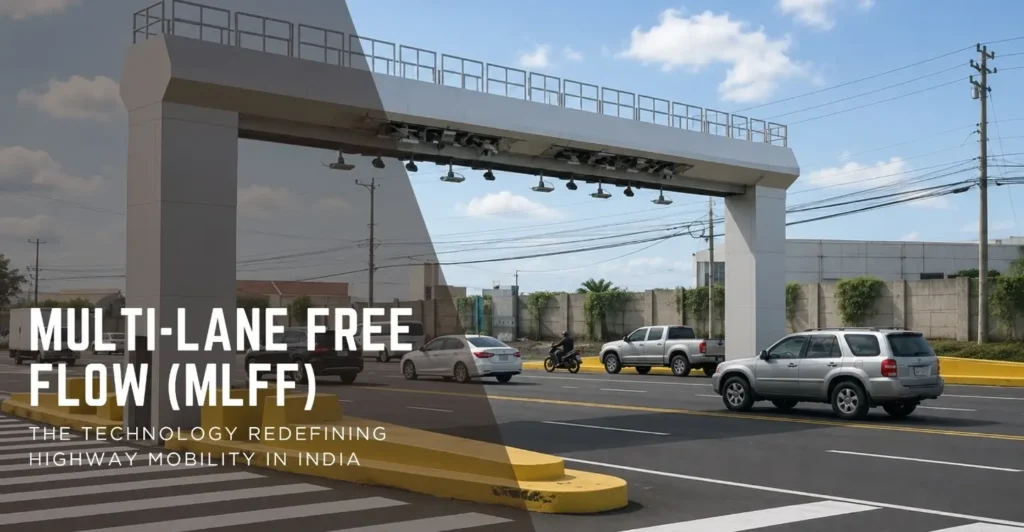
Multi-Lane Free Flow (MLFF) is a modern toll collection system that allows vehicles to move through toll corridors without stopping at toll booths or barriers. Instead of waiting in queues or slowing down for payments, tolls are collected automatically while the vehicle is still in motion.
The system uses a combination of RFID-based FASTag identification, ANPR cameras, and centralized digital processing platforms to make this possible. As a vehicle passes under an MLFF gantry, these technologies work together in real time to identify the vehicle, validate the transaction, and process the toll payment within a few seconds.
The overall goal is simple: reduce congestion, save travel time, improve traffic flow, and make highway transportation more efficient for both daily commuters and commercial vehicles.
Technologies Powering MLFF
At the core of the MLFF ecosystem is a combination of advanced identification, sensing, and digital processing technologies working together in real time.
RFID & FASTag Technology
RFID technology forms the foundation of the MLFF system through FASTag-based vehicle identification.
Key capabilities include:
- UHF RFID operation in the 865–868 MHz band
- Support for ISO 18000-6C / EPC Gen2 communication standards
- Long-range vehicle identification for moving vehicles
- High-speed tag reading with fast response time
- Multi-lane reading capability with minimal interference
- Dense Reader Mode (DRM) support for stable performance in high RF environments
- Configurable RF output power, typically up to 33 dBm
- Multiple antenna port support for lane-wise coverage
- Reliable operation in outdoor highway conditions
- Secure and encrypted transaction communication
- Integration support with ANPR cameras, backend tolling software, and traffic management systems
MLFF Ready – RAIN RFID Readers for High-Speed Tolling
At ID Tech Solutions, our next-generation RAIN RFID readers are designed to support demanding MLFF and intelligent transportation applications. Built for high-speed FASTag reading, multi-lane tolling environments, and outdoor deployments, the readers are engineered to deliver reliable performance, accurate vehicle identification, and seamless integration with modern tolling infrastructure.
AI-Based ANPR Cameras
Automatic Number Plate Recognition (ANPR) cameras act as an intelligent verification layer within the system.
These AI-powered cameras help:
- Capture vehicle number plates in real time
- Verify FASTag transactions
- Identify vehicle categories
- Detect toll violations
- Improve overall transaction accuracy
By combining AI with visual analytics, the system becomes more secure, scalable, and efficient.
Smart Gantry Infrastructure
Instead of traditional toll booths, MLFF uses overhead smart gantries equipped with integrated hardware systems.
These gantries typically include:
- RFID readers and antennas
- AI-enabled ANPR cameras
- Edge processors and controllers
- Network communication systems
As vehicles pass under the gantry, the entire tolling process is completed digitally without requiring physical barriers or lane stoppage.
Centralized Digital Processing
Behind the physical infrastructure is a centralized digital ecosystem responsible for transaction processing and traffic analytics.
The backend infrastructure enables:
- Real-time toll deduction
- FASTag wallet integration
- Vehicle database connectivity
- Traffic monitoring and reporting
- Highway analytics and operational insights
This creates a connected transportation network capable of supporting future intelligent mobility applications.
Why MLFF Is a Major Transformation for Indian Highways
The introduction of MLFF is expected to bring major improvements to highway transportation in India by reducing congestion, fuel wastage, and travel delays. According to Road Transport and Highways Minister Nitin Gadkari, the barrier-less tolling system can help save fuel worth ₹285 crore annually while reducing nearly 81,000 tonnes of CO₂ emissions every year.
He also stated that vehicles will be able to move through toll corridors at speeds of up to 100 km/h without stopping, using FASTag, ANPR technology, and AI-based cameras for automatic toll collection. Additionally, toll collection operational costs are expected to reduce from nearly 15% to around 3–4%, potentially saving ₹6,000–7,000 crore annually.
MLFF and the Future of Intelligent Transportation
MLFF is not just changing toll collection, it is helping build the foundation for India’s future intelligent transportation infrastructure. Powered by RFID, AI, ANPR, and automation, the ecosystem can support smarter traffic management, connected highways, and real-time mobility systems.
For MLFF deployments, RFID readers are required to support high-speed FASTag detection, fast tag acquisition, Dense Reader Mode (DRM), high RF output power, and stable performance in continuously moving highway environments. At ID Tech Solutions, our MLFF-ready RAIN RFID readers and highway-grade antennas are engineered specifically for these demanding tolling applications, supporting intelligent and seamless toll collection infrastructure.
As India moves toward smarter and more connected highways, ID Tech continues to work closely with National Highways Authority of India (NHAI) and industry partners to support the future of seamless, connected, and intelligent mobility across Indian highways through advanced RFID innovation and intelligent transportation technologies.